
How to choose a therapist who is right for you
Learn how to find the ideal therapist by prioritizing personal rapport and using discovery calls to ensure the right fit for your mental health goals.

Clinically reviewed by
Dr Martina Paglia
Founder & CEO of Mind a Porter
HCPC-registered Clinical Psychologist
Special interests include anxiety, depression, trauma, OCD, burnout, workplace stress, relationship difficulties and high-performance mental wellbeing.
Last reviewed: 22 September 2026
All health information on Mind a Porter is clinically reviewed by our clinical lead. These resources are educational and do not replace professional advice.
Set a clear goal for therapy, check two or three access routes, then book 15 to 30 minute intro calls with two or three therapists before deciding. Judge each one mainly on rapport, not credentials alone. Research consistently points to the therapeutic alliance as the strongest predictor of how well therapy works, so a therapist you trust and feel heard by will usually help you more than one with an impressive CV but no connection.
Before you contact anyone, get three things straight:
-
Goal: what you want to work on (anxiety, a relationship, trauma, low mood)
-
Budget: NHS, private, or somewhere in between
-
Format: online, in person, or either
Once those are settled, your next move is simple: shortlist two or three therapists and book a first call this week.
Key Takeaways
Choosing the right therapist depends more on the strength of your rapport with them than on their specific credentials or therapeutic method.
| Point | Details |
|---|---|
| Prioritise the alliance | Research shows the therapeutic relationship is the strongest predictor of therapy outcome. |
| Use the intro call properly | A 15 to 30 minute call is your chance to ask about training, approach and fees before committing. |
| Expect to compare a few | Speaking with two or three therapists before deciding is normal, not indecisive. |
| Watch for green and red flags | Collaborative goal setting and regular feedback are good signs; rigid methods and dismissiveness aren’t. |
| Consider a matching platform | Mind a Porter offers no-waitlist matching across 22+ languages with CBT and EMDR options. |
This article is general information, not a substitute for advice from a qualified doctor. Consult a qualified healthcare professional about your own circumstances before acting on anything here.
Table of Contents
How to choose a therapist: where to start looking
Your search route depends on urgency, budget and language needs. NHS talking therapies are free and a reasonable first stop if you can tolerate a waiting list, which varies by area and can run into weeks or months. Private therapy costs more but usually starts faster, and you get to choose your therapist directly rather than being assigned one.
-
NHS referral: free, self-referral or via your GP, but waiting lists vary widely by region
-
Private directories: filter by specialism, language, modality and price before you make contact
-
Matching platforms: filter the same criteria but connect you faster, sometimes immediately
-
GP referral: useful if you also need a wider assessment or medication review alongside talking therapy
Directories and finder tools let you narrow candidates by specialism, language, modality and availability before you spend time on calls. If you need support while you wait, charities such as Samaritans offer immediate listening support, though this isn’t a substitute for structured therapy.
What should you ask in the first consultation?
Most therapists offer a short introductory call, usually 15 to 30 minutes, before you commit to a first full session. Treat it as a two-way interview rather than a formality.
-
Confirm the call length and what it’s meant to cover
-
Ask about their registration or licence, and their experience with your specific concern
-
Ask how they work and how they’ll track whether therapy is helping
-
Clarify fees, cancellation policy, and what happens if you need urgent support between sessions
Pro Tip: Write down your concern in one or two sentences before the call. Having a 30-second summary ready means you spend the time asking questions, not searching for words.
A therapy checklist for the first consultation can help you keep these questions straight if this is your first time doing it.
What are the signs of a good therapist?

The relationship between you and your therapist, known as the therapeutic alliance, is widely regarded as the single strongest predictor of a good outcome. You’ll usually feel it within the first couple of sessions: does the therapist listen without rushing to conclusions, and do they check that you agree with the direction you’re heading in together?
Green flags:
-
They ask about your goals and revisit them regularly
-
They explain their approach without jargon
-
They invite feedback and adjust when something isn’t working
-
They seek to understand your specific situation rather than fitting you into a fixed method
Red flags:
-
They dismiss your concerns or seem distracted
-
They stick rigidly to one framework regardless of how you respond to it
-
They avoid discussing progress or fees clearly
Good therapists tend to set collaborative goals and check progress regularly rather than assuming things are working. After three or four sessions, ask yourself: do I feel more understood, and is there a plan I recognise?
Should you choose online or in-person therapy?
Both formats can work well. Evidence suggests online therapy is effective when the therapeutic alliance is strong, so pick whichever format you’ll actually attend consistently rather than the one that sounds more serious.
-
CBT: structured, often short-term, useful for anxiety and specific unhelpful thought patterns
-
EMDR: commonly used for trauma and distressing memories
-
Psychodynamic: longer-term, focused on patterns rooted in past relationships and experience
Modality matters less than most people assume. For many concerns, the relationship with your therapist predicts progress more reliably than which technique they use.
How much does therapy cost and how does scheduling work?
Private session fees vary by therapist, location and experience, so ask for the exact rate during your intro call rather than assuming a standard price. Some therapists offer sliding-scale fees for those on lower incomes, and it’s worth asking directly if this isn’t listed.
-
Check whether your health insurance covers any part of the cost before booking
-
Ask about typical session frequency (usually weekly to start) and how that might change over time
-
Clarify the cancellation policy, since many therapists charge for late cancellations
-
If your first-choice therapist has a waiting list, ask whether they can suggest a colleague for interim support
How do you decide after your first few sessions?
Give yourself permission to speak with two or three therapists before settling on one. This isn’t indecisive; it’s standard advice from professional bodies who recommend comparing credentials, approach and fees across a few candidates before committing.
-
After two or three sessions, check for goal clarity: do you both agree on what you’re working towards?
-
Notice whether you feel genuinely heard, not just heard out
-
Look for a clear plan, whether that’s homework, discussion topics, or techniques to practise
-
If something feels off, say so directly. A good therapist will respond well to feedback
-
If it still doesn’t fit after raising concerns, it’s reasonable to switch. Most therapists expect this and won’t take it personally
What does a reputable matching platform actually offer?
A platform worth using should let you filter by specialism, language and availability, and connect you with a therapist quickly rather than leaving you on a generic waitlist. Mind a Porter, for example, matches clients with therapists across more than 22 languages and offers immediate connections with no waiting list, alongside modalities including CBT and EMDR.
-
Check that therapist profiles show registration or licence details clearly
-
Look for transparent pricing and a stated cancellation policy before booking
-
Confirm the platform lets you filter by the specific issue you’re dealing with, not just general categories
Pro Tip: Before trusting any platform’s claims, look for a sample therapist profile. If it shows qualifications, experience and fees upfront, that’s a good sign the service is transparent by default.
Mind a Porter reports a 98% client satisfaction rate across more than 13,717 sessions delivered. This is worth checking against your own experience in the first few sessions.
A short note on persistence
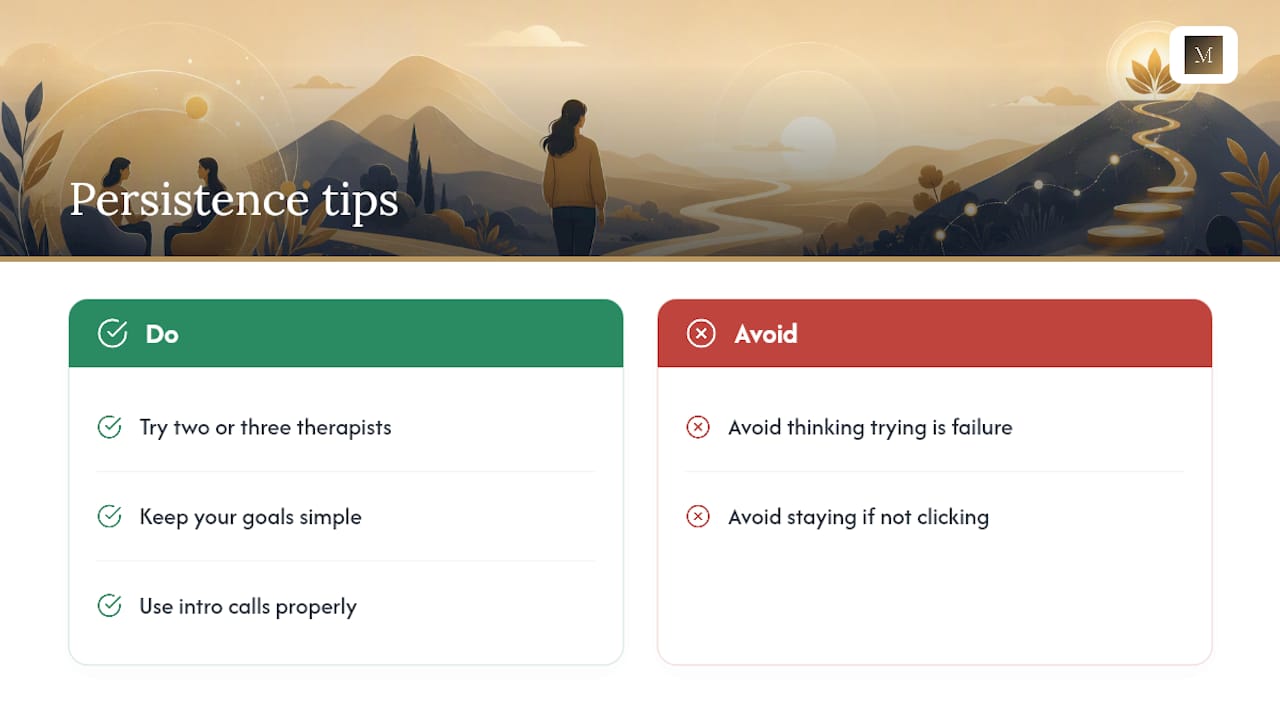
Trying two or three therapists before finding the right fit isn’t failure. It’s how this process usually works. Keep your goals simple, use intro calls properly, and don’t hesitate to switch if something isn’t clicking. That’s not giving up. It’s how you get to the therapy that actually helps.
Get matched with a therapist without the wait
Mind a Porter is the alternative to a lengthy NHS waiting list or a scattershot directory search: instead of scrolling profiles and guessing, you get matched based on specialism, language and availability, with no waiting list standing between you and a first session.
If speed, language matching, or a specific specialism (trauma, relationships, anxiety) matters to you, this is exactly where a matching service earns its place over a general search. Whether you need short-term support or an ongoing therapeutic relationship, for individuals, couples or families, the process starts the same way: book an introductory session through Mind a Porter and see how the match feels within your first call.
Sources
Professional Support
Find the Right Therapy
Explore specialist treatment options related to this article.
Couples Therapy
Rebuild communication, trust, and connection with expert support.
Learn moreRelationship Counselling
Support for communication problems, trust issues, and recurring conflict.
Learn moreEmotionally Focused Therapy
Evidence-based couples therapy for distress and attachment injuries.
Learn moreKeep Reading
Related Articles

Six to 12 Months to Rebuild Trust: UK Couples Therapy for Infidelity
Discover the essential phases of infidelity recovery, proven therapeutic methods, and the practical steps to finding the right UK specialist for your healing journey.

Betrayal trauma therapy: how it helps you heal and stabilise
Discover how a paced therapeutic approach prioritizes nervous system regulation and stability before addressing the deeper wounds of betrayal trauma.

Questions to Ask When Choosing a Therapist
A practical guide to the questions that matter when choosing a therapist — qualifications, approach, style, practicalities, the therapeutic relationship, and what to listen for beyond the answers — with a quick-reference summary.