
8 sessions with Vitality mental health cover UK, Mind a Porter access
Discover how to leverage your Vitality health insurance for therapy sessions and digital support while exploring additional access options through providers like Mind a Porter.

Clinically reviewed by
Dr Martina Paglia
Founder & CEO of Mind a Porter
HCPC-registered Clinical Psychologist
Special interests include anxiety, depression, trauma, OCD, burnout, workplace stress, relationship difficulties and high-performance mental wellbeing.
Last reviewed: 28 September 2026
Yes, Vitality provides mental health cover as part of its health insurance plans. Core cover includes up to eight talking therapy sessions per plan year, a Headspace subscription and app-based tools such as Wysa, all accessible without a GP referral in most cases. Members can add an optional enhanced package for outpatient psychiatry and higher monetary limits, though anyone in crisis should contact NHS or emergency services first rather than wait for a claim to process.
TL;DR:
- Vitality's core mental health cover provides up to eight talking therapy sessions per year, a Headspace subscription, and app-based tools like Wysa, accessible without a GP referral.
- Members can self-refer for therapy and follow personalized assessments to determine whether to start with digital tools or face-to-face therapy.
- Enhanced cover offers more sessions, outpatient psychiatry, inpatient limits, and higher claim caps for complex or ongoing mental health conditions.
- Restrictions include limits on long-term or experimental treatments, with private cover complementing NHS services rather than replacing them.
- Using platforms like Mind a Porter can provide immediate access to therapists across multiple languages and specializations, bypassing waiting lists for urgent needs.
Table of Contents
- What core mental health cover includes
- How to access support and make a claim
- What enhanced mental health cover adds
- What private cover usually doesn't include
- Everyday prevention and digital supports included with cover
- Using private cover alongside NHS services and urgent support
- How platforms like Mind a Porter can work with private cover
- A clinician's view on combining insurance and digital tools
- How Mind a Porter helps you access therapy quickly
- Sources
- FAQ
What core mental health cover includes
Vitality's standard health insurance plans build mental health support into the core cover rather than treating it as an add-on. Members get access to talking therapies, self-management apps and a route to see a specialist when needed.
The main components are:
- Talking therapy sessions: up to eight sessions per plan year, covering approaches such as cognitive behavioural therapy (CBT) and general counselling, delivered online or face to face.
- Headspace subscription: a 12-month Headspace subscription giving members guided meditation, sleep and mindfulness content.
- App-based pathways: tools such as Wysa for structured self-help exercises, recommended through the Care Hub assessment.
- Self-referral: members can self-refer for talking therapy rather than needing a GP letter first in most circumstances.
Session logistics are straightforward. A member completes an assessment, gets matched to a practitioner approved by Vitality, and chooses between remote or in-person appointments depending on preference and availability. Cognitive behavioural therapy remains one of the most widely used approaches for anxiety and depression, and the NHS publishes self-help CBT techniques that mirror much of what a private talking therapy session covers.
Cover details vary by plan type. Personal plans, business plans and corporate schemes can differ in excess levels, the exact provider network and whether enhanced psychiatry cover is included as standard or sold separately. Some plans carry an excess that applies when a claim is made, which affects the amount a member pays before cover kicks in. Anyone unsure which version of cover they hold should check their policy schedule rather than assume the headline eight-session figure applies without conditions.
How to access support and make a claim
Getting started with Vitality's mental health cover follows a fairly consistent path, though the exact route depends on what a member needs.
- Complete the Care Hub assessment: log in and answer the online questions, which Vitality uses to recommend a pathway, whether that is Wysa, Headspace or talking therapy.
- Follow the recommended pathway: this might mean starting with app-based exercises before a session is booked, or going straight to talking therapy if the assessment indicates it.
- Arrange a GP referral if needed: some services, particularly outpatient psychiatry under enhanced cover, may require a referral letter rather than allowing self-referral.
- Keep records of every appointment: dates, provider names and any invoices, since these support a claim and speed up processing.
- Submit claims through the member portal: following the process set out in the Care Hub guidance, checking whether an excess applies to the specific treatment.
Excesses can apply when accessing talking therapy or psychiatry, and Vitality's help centre advises members to check their plan details before booking so there are no surprises when a claim is settled. Self-referral generally doesn't change how a claim is handled once treatment has started, but it does mean the assessment stage takes place through the Care Hub rather than a GP surgery.
Pro Tip: Before booking your first session, ask the provider whether they're in Vitality's network. Out-of-network care can mean a longer claims process or a reduced payout.

What enhanced mental health cover adds
Core cover suits many members, but some conditions need more than eight talking therapy sessions or access to a psychiatrist rather than a counsellor. Vitality's optional enhanced mental health cover is built for that gap.
The main additions are:
- Extended talking therapy cover: rather than being capped at eight sessions, enhanced cover can provide fuller access depending on clinical need.
- Outpatient psychiatry cover: with a monetary cap, for example up to £1,500 outpatient, for consultations and psychiatric assessment.
- Inpatient and day-patient limits: a defined number of days, for example 28 days, for those who need admission for more intensive treatment.
- Higher overall claim limits: giving more flexibility for members managing complex or recurring conditions.
Enhanced cover tends to make sense for someone with a diagnosed condition that needs ongoing psychiatric input, or for a member whose talking therapy needs are likely to exceed the standard session allowance within a plan year. It's worth distinguishing between outpatient psychiatry, which involves seeing a psychiatrist for consultations and prescribing, and talking therapy, which is delivered by a counsellor or psychotherapist and doesn't typically involve medication. The two are covered differently, with separate limits and sometimes separate excesses, so checking policy wording before assuming a cost is covered under one heading rather than the other avoids confusion later.
What private cover usually doesn't include
Private health insurance is not designed to replace the full range of NHS mental health services, and Vitality's cover has boundaries worth understanding before you rely on it.
Common exclusions include:
- Long-term or indefinite therapy series: cover is generally built around a defined number of sessions per plan year, not open-ended treatment.
- Experimental or unproven treatments: therapies without an established evidence base are typically excluded.
- Routine long-term prescribing: ongoing medication management without psychiatric input or referral often falls outside what's covered.
- Condition-specific exclusions: some pre-existing conditions may be excluded depending on when the policy started and what was disclosed.
There's an important nuance on pre-existing conditions. Vitality has published guidance stating that it disregards medical history for in-network talking therapies, meaning members can access these sessions regardless of past mental health history, which is a notable departure from how many insurers underwrite mental health cover. That disregard applies specifically to in-network talking therapy rather than every mental health service on a plan. Given how much detail sits in individual policy wording, contacting Vitality directly to confirm cover before booking a specific treatment is the safest step.
Everyday prevention and digital supports included with cover
Alongside formal therapy, Vitality's cover leans on digital tools designed for day-to-day self-management. These sit at the start of a stepped-care approach rather than replacing clinical treatment.
- Headspace: guided meditation, sleep content and mindfulness programmes included as a 12-month subscription.
- Wysa: an app offering more than 150 evidence-based exercises for anxiety, low mood and stress management.
- Care Hub triage: the online assessment that recommends whether self-help tools or a referral to talking therapy is the better starting point.
Digital support tends to work best for mild to moderate stress, sleep difficulties or as a maintenance tool alongside therapy, rather than as a substitute for clinical treatment when symptoms are more severe. Many members use Headspace or Wysa between talking therapy sessions to reinforce techniques learned with a practitioner, which supports the stepped-care model Vitality has built its Care Hub around.
Pro Tip: Use Wysa or Headspace in the weeks before your first talking therapy session starts. It gives your therapist a clearer picture of what you've already tried.
Using private cover alongside NHS services and urgent support
Private cover and NHS mental health services aren't competitors. They serve different needs, and understanding when to use each saves time and stress.
NHS talking therapies, accessible through NHS self-referral or a GP, are free and cover a wide range of conditions, though waiting lists can run longer than a private route. Vitality's cover offers speed and choice of provider but works within defined session limits and monetary caps.
- Use private therapy when you want a faster first appointment or to choose a specific practitioner.
- Use NHS referral when your needs are ongoing, complex or you'd rather not use annual session allowances.
- Use crisis services immediately if you or someone else is in danger or in severe distress.
For urgent support, Samaritans offers a 24/7 helpline, and SHOUT provides a free crisis text line on 85258. Vitality and NHS signposting consistently point to Samaritans, Papyrus and SHOUT as the primary 24/7 support options for anyone who cannot wait for a scheduled appointment. None of these require insurance or a referral, and none should be delayed while a claim is processed.
How platforms like Mind a Porter can work with private cover
Vitality cover gives members a defined number of sessions and a network of approved providers, but waiting lists and provider availability can still slow things down. A therapy marketplace can fill that gap for someone who needs an appointment sooner rather than later.
- Marketplace matching: platforms like Mind a Porter match clients to therapists by specialism, language and cultural fit rather than offering a single generic list.
- No waiting list: immediate connections are possible rather than a multi-week queue for a first appointment.
- Language and modality range: Some therapy marketplaces offer therapists across multiple languages and modalities including CBT and EMDR.
- Claims practicality: sessions booked through a marketplace can still be submitted for reimbursement where a Vitality plan allows out-of-network claims, provided receipts and session details are kept.
Immediate access to therapists without waiting lists, with personalised matching based on language, culture and specialist needs.
A marketplace suits someone who wants a specific specialist or a same-week appointment. Vitality's in-network route suits someone prioritising the lowest out-of-pocket cost and a straightforward claim within the eight-session allowance.
A clinician's view on combining insurance and digital tools
The best results tend to come from starting with an honest assessment of severity rather than jumping straight to therapy or medication. Mild stress or sleep difficulty often responds well to structured self-help tools like Wysa or Headspace before a formal referral is needed. Where symptoms are more persistent, talking therapy under core cover is usually the right next step, with enhanced cover and psychiatric input reserved for cases where medication or a formal diagnosis is involved.
Not every case fits neatly into a private pathway. Some conditions, particularly those needing sustained multidisciplinary input, are better served by NHS specialist teams, and private cover should be seen as a complement to that system rather than a replacement for it.
How Mind a Porter helps you access therapy quickly
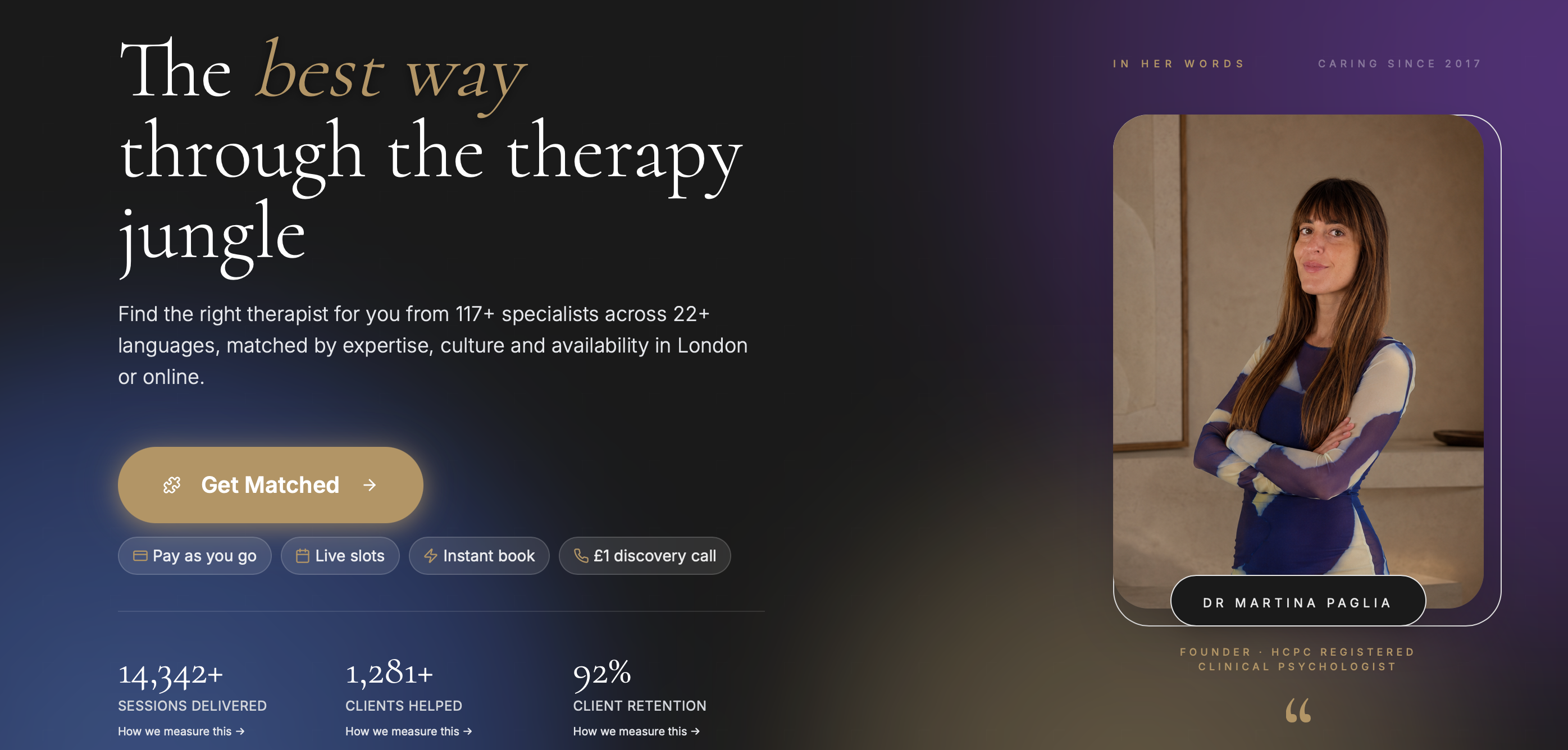
Waiting for a session to become available within your insurance network can feel like the hardest part of getting support. Mind a Porter connects you to a therapist without a waiting list, matching you by specialism, language and cultural fit across more than 25 languages, so you can start sooner rather than later.
- Discovery Call: an initial conversation to check fit before committing to ongoing sessions.
- Individual, couples and family therapy: tailored pathways depending on who needs support.
- ADHD and autism assessments: available for clients whose needs go beyond talking therapy alone.
- Online therapy: sessions delivered remotely for flexibility around work and family commitments.
| What you get | Detail |
|---|---|
| Discovery call | a low-cost initial booking to check fit with a therapist |
| Language range | More than 25 languages available across the therapist network |
| Waiting list | No waiting list, with immediate connections |
If your Vitality plan allows out-of-network claims, keep your session receipts and provider details so you can submit them through your usual claims process. You can book a discovery call or browse the full range of services to see which pathway fits your situation, and gift cards are also available for anyone wanting to give a session to someone else.
This article is general information, not a substitute for advice from a qualified doctor. Consult a qualified healthcare professional about your own circumstances before acting on anything here.
Sources
- Mental health cover | Vitality
- How can I get mental health support with my plan? | Vitality Help Centre
- Vitality upgrades mental health support for PMI policyholders with app-based pathway | Protection Reporter
- Mental health | NHS
- Samaritans
FAQ
Can I claim mental health benefits in the UK?
Yes, private health insurance such as Vitality's core cover allows claims for talking therapy sessions, and NHS talking therapies are available free through self-referral or a GP. Which route suits you depends on how quickly you need an appointment and whether you'd rather use NHS resources or your annual private session allowance.
Which life insurance company is best for people with mental health conditions?
This article focuses on health insurance and mental health cover rather than life insurance underwriting, so a direct comparison isn't covered here. For mental health cover specifically, Vitality has stated it disregards medical history for in-network talking therapies, which is worth checking against other providers' underwriting terms.
What conditions does Vitality cover?
Vitality's core mental health cover supports common conditions such as anxiety, depression and stress through up to eight talking therapy sessions per plan year, alongside Headspace and app-based tools. More complex or long-term conditions may need the optional enhanced cover, which adds outpatient psychiatry and higher monetary limits.
Does Vitality Health cover ADHD medication?
Vitality's published mental health cover focuses on talking therapies, Headspace and app-based support rather than routine long-term medication management, which typically sits outside standard policy terms. Anyone needing an ADHD diagnosis or medication review should check their specific policy wording or speak to Vitality directly, since psychiatric referral rules vary by plan.
Keep Reading
Related Articles

Start NICE Backed Postnatal Depression Therapy This Week in the UK
Discover your options for accessing evidence-based postnatal depression treatment in the UK, including NHS pathways, private therapy, and combined recovery strategies.

Before You Walk Onstage: EMDR for Performance Anxiety in 2–4 Sessions
Discover how targeted EMDR therapy can reprocess past memories to help performers overcome stage fright and regain confidence in just a few sessions.

Trauma Bond Recovery: Break the Neurological Hold with 10 Minutes a Day
Learn how to dismantle the neurological grip of a trauma bond using daily regulation habits, professional therapeutic support, and a structured path to recovery.