
Self esteem therapy: what actually helps and where to start
Discover effective therapeutic approaches for rebuilding self-worth, practical exercises to try at home, and guidance on finding the right professional support.

Clinically reviewed by
Dr Martina Paglia
Founder & CEO of Mind a Porter
HCPC-registered Clinical and Performance Psychologist · BSc, MSc, MA (Dist.), CP Licensure, MBA
Special interests include anxiety, depression, trauma, OCD, burnout, workplace stress, relationship difficulties and high-performance mental wellbeing.
Last reviewed: 22 September 2026
Yes, therapy can meaningfully improve low self-esteem. The approaches most often used are cognitive behavioural therapy (CBT), acceptance and commitment therapy (ACT), and psychodynamic or compassion-focused work, each tackling the problem from a different angle. If you want somewhere to start today, try a short thought-challenging exercise, look into NHS self-referral, or book a private match with a therapist who specialises in self-esteem.
TL;DR:
- Cognitive behavioral therapy can help challenge automatic negative thoughts by testing evidence and replacing patterns that reinforce low self-esteem.
- Acceptance and commitment therapy teaches observing negative thoughts without judgment and proceeding according to personal values, reducing self-criticism.
- Self-esteem work often benefits from specific exercises like thought testing, behavioral experiments, and self-compassion practices which can be done independently.
- Finding a therapist matching your language, cultural background, and specific concern increases the likelihood of effective and lasting progress.
- Early improvements often occur within weeks through small changes, but profound shifts in self-worth may take longer and require ongoing sessions.
Table of Contents
- What is self-esteem and how does low self-esteem show up day to day?
- What causes low self-esteem, and what keeps it going?
- How do CBT, ACT and psychodynamic therapy tackle low self-esteem?
- Which exercises can you try right now?
- How do you find the right therapist, NHS or private?
- How Martina and Mind a Porter match people to the right therapist
- What should you realistically expect from therapy over time?
- Ready to start therapy matched to your needs?
- Sources
What is self-esteem and how does low self-esteem show up day to day?
Self-esteem is the overall value you place on yourself, distinct from confidence, which is more about belief in specific skills. You can feel confident presenting at work and still carry a quiet conviction that you're not good enough as a person. That gap is where low self-esteem tends to live.
It rarely announces itself outright. Instead, it shows up in patterns that gradually shape a life:
- Persistent negative self-talk, often so automatic it feels like fact rather than opinion
- People-pleasing and difficulty saying no, driven by fear of rejection
- Avoiding challenges or new relationships in case they confirm self-doubt
- Strained relationships, either through withdrawal or excessive need for reassurance
The NHS notes that low self-esteem affects how people relate to others as much as how they see themselves, which is why it so often surfaces first as an anxiety or relationship problem rather than a stated self-worth issue.
What causes low self-esteem, and what keeps it going?
Most low self-esteem has a starting point, and it's rarely one dramatic event. Childhood feedback from parents, teachers, and peers plants the earliest seeds, particularly when criticism outweighed encouragement or when a child was compared unfavourably to siblings or classmates. Bullying does similar damage, often leaving a script that runs long after the bullying stops.
Adult life adds its own pressures. Bereavement, redundancy, divorce, and the endless comparison loop of social media can all reopen or reinforce old wounds. Research on the origins of low self-esteem points to internalised negative messages from childhood, sustained into adulthood by cognitive biases: selectively noticing failures, discounting compliments, assuming the worst about how others see you.
A few patterns tend to keep the cycle turning:
- Avoidance, which prevents any disconfirming evidence from reaching you
- All-or-nothing thinking, where one mistake erases every prior success
- Mental filtering, where negative feedback sticks and positive feedback slides off
Body image often tangles with this. Interventions that target body image frequently overlap with self-esteem work, because how people feel about their appearance and how they feel about themselves as people are rarely separate conversations.
Pro Tip: Keep a short note of moments when you assumed the worst about a situation and it didn't happen. Reading it back after a few weeks is often the first evidence that your predictions aren't as reliable as they feel.
How do CBT, ACT and psychodynamic therapy tackle low self-esteem?
No single therapy owns this problem, and that's good news. Different approaches suit different people, and knowing what each one actually does helps you choose rather than guess.
-
Cognitive behavioural therapy works by identifying automatic negative thoughts, testing them against real evidence, and building new behaviours through structured experiments. A CBT therapist might ask you to challenge the thought "everyone will judge me" by actually speaking up in a meeting and recording what happened. The NHS lists cognitive restructuring as one of the core techniques used across this kind of work.
-
Acceptance and commitment therapy takes a different route. Rather than disputing every self-critical thought, ACT teaches you to notice the thought, let it pass, and act according to your values anyway. This defusion approach can loosen the grip of self-criticism without requiring you to win an argument with your own mind first.
-
Psychodynamic and schema therapy dig into where the self-critical narrative began, often tracing it back to early relationships and unmet needs. This suits people whose low self-esteem feels rooted in a specific history rather than a current thinking habit.
-
Compassion-focused therapy builds the capacity for self-kindness directly, which matters when shame, not just negative thinking, sits at the centre of the problem.
A review of interventions targeting self-esteem and body image found that specific techniques, such as structured self-esteem enhancement exercises and psychoeducation, tend to be the active ingredients behind positive outcomes, rather than the label of the therapy itself. That's worth remembering: what a therapist actually does in the room matters more than which school of thought they trained in.
Which exercises can you try right now?
You don't need to wait for a first appointment to begin. These therapy-aligned techniques are safe to try alone, and they also give you useful material to bring into sessions.
-
Spot and test a negative thought. Write down a specific situation, the automatic thought it triggered, and the emotion attached to it. Then ask: what's the actual evidence for and against this thought? The Mayo Clinic's steps for raising self-esteem follow this same sequence: notice, examine, challenge, reframe.
-
Run a small behavioural experiment. Pick a belief you hold about yourself, such as "if I disagree with someone, they'll be annoyed with me." Design a low-stakes test: voice a mild disagreement and note what actually happens. Good experiments are specific, measurable, and tied to one clear prediction rather than a vague hope of "feeling better."
-
Practise a three-minute self-compassion pause. When you catch harsh self-talk, stop and ask what you'd say to a friend in the same position. Say it to yourself instead, out loud if you can manage it.
-
Journal with structure, not just venting. Prompts like "what did I do well today, even in a small way?" or "what would I tell my younger self about this situation?" tend to produce more useful material than open-ended diary writing.
Pro Tip: Behavioural experiments work best when a therapist helps you design them, because a poorly framed test can accidentally confirm the very fear you're trying to challenge.
Trustworthy worksheets are freely available through NHS-endorsed resources and reputable clinical sites, but treat them as a starting point, not a replacement for support. If low mood tips into thoughts of self-harm or feeling unable to cope, that's a signal to seek help immediately rather than continue with self-guided exercises. Samaritans offers 24/7 support if you need to talk to someone now.

How do you find the right therapist, NHS or private?
In the UK, you have three main routes into support: self-referral to NHS talking therapies, a referral through your GP, or booking directly with a private therapist. NHS routes are free but often carry a waiting list; private therapy typically means faster access and more choice over specialism, at a cost you pay yourself or through insurance.
Whichever route you take, a short checklist helps you avoid a poor match:
- Confirm the therapist is registered with a recognised professional body, since registration standards exist precisely to protect clients
- Ask whether they specialise in self-esteem, body image, or the specific issue underneath it
- Check which modality they practise and whether it matches what you're looking for
- Clarify fees upfront, and ask about language or cultural fit if that matters to you
A useful guide to choosing a therapist can help you work through these questions in more depth before you commit.
A first session usually involves your therapist asking about your history, current difficulties, and what you want from treatment, rather than diving straight into techniques. Most people notice small shifts within a handful of sessions, though deeper, more durable change tends to take longer.
How Martina and Mind a Porter match people to the right therapist
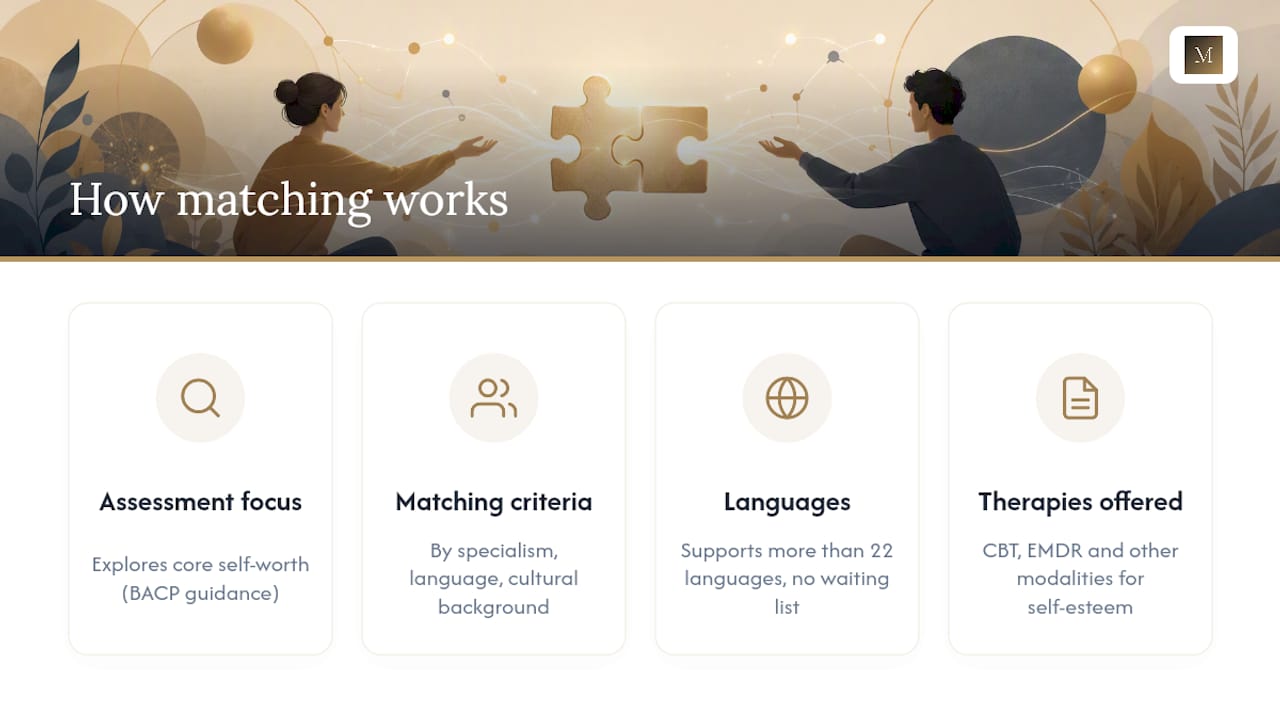
Low self-esteem often hides underneath presenting problems like anxiety or relationship strain, and the British Association for Counselling and Psychotherapy notes that effective assessment explores core self-worth rather than symptoms alone. Mind a Porter connects clients to therapists matched by specialism, language, and cultural background, across more than 22 languages, with no waiting list for a first connection. Therapists on the platform offer CBT, EMDR, and other modalities suited to self-esteem work, and Mind a Porter reports a very high client satisfaction rate. Matching on language and culture isn't a nicety here. It shapes whether a client feels understood enough to do the deeper work at all.
What should you realistically expect from therapy over time?
Early shifts, feeling slightly less reactive to criticism, catching a negative thought before it spirals, often appear within weeks or a few months of consistent sessions. Deeper change, the kind where self-worth stops depending on external validation, usually takes longer and rarely moves in a straight line. Watch for small, concrete signs: speaking up more, recovering faster after setbacks, less need for reassurance. If progress stalls for several sessions running, that's worth raising with your therapist rather than assuming the approach has failed outright.
Ready to start therapy matched to your needs?
Most people looking into self esteem counselling face a choice between a long NHS waiting list or trawling directories with no way to judge fit in advance. Mind a Porter closes that gap by matching you to a therapist based on specialism, language, and cultural background, with no waiting list standing between you and a first conversation.
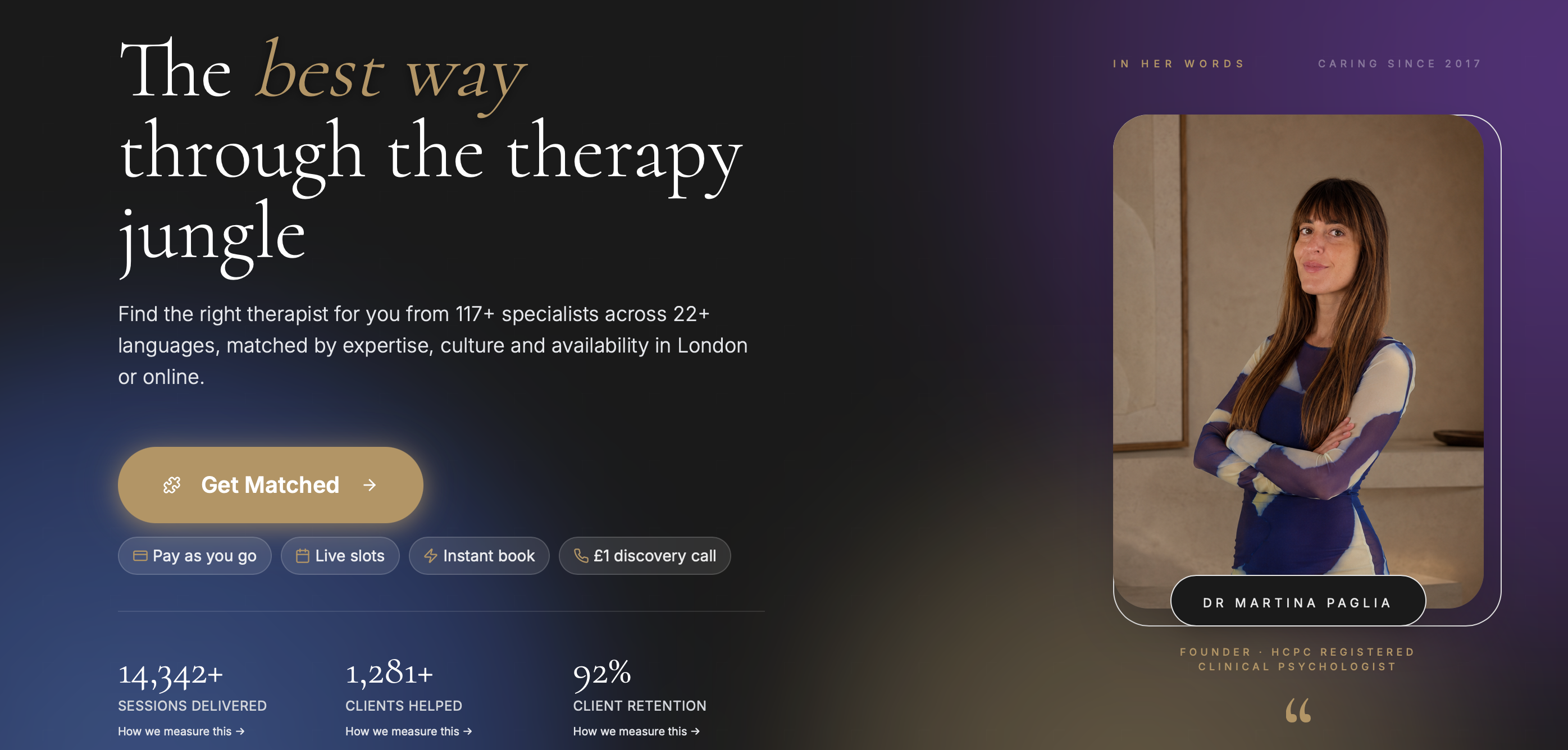
You can browse therapist profiles, book an initial discovery call, and confirm registration and specialism before committing to ongoing sessions. With therapists offering CBT, EMDR, and other approaches across more than 22 languages, Mind a Porter is built for people who want to feel understood from the first session, not the fifth. Visit the Mind a Porter therapist directory to see who's available and book your first call.
This article is general information, not a substitute for advice from a qualified doctor. Consult a qualified healthcare professional about your own circumstances before acting on anything here.
Sources
Keep Reading
Related Articles

Attachment Styles in Relationships: How to Become More Secure
Discover how your early attachment patterns shape your adult relationships and learn actionable steps to foster greater security and emotional intimacy.

Neurodiversity-affirming therapy: what it is and how to find one
Discover how to identify therapy that celebrates your unique neurotype instead of forcing you to mask and conform to neurotypical standards.

How to Get the Most From Therapy: A Practical Guide for 2026
A 2026 practical guide to getting the most from therapy — what research says, how to engage in sessions, what to do between sessions, handling obstacles, and how Mind a Porter supports the work with clinically-designed matching and £1 discovery calls.