
Imposter Syndrome Therapy in the UK: NHS CBT Can Help Within Weeks
Discover how evidence-based therapies like CBT can help you overcome imposter feelings and build confidence through accessible NHS and private support options.

Clinically reviewed by
Dr Martina Paglia
Founder & CEO of Mind a Porter
HCPC-registered Clinical Psychologist
Special interests include anxiety, depression, trauma, OCD, burnout, workplace stress, relationship difficulties and high-performance mental wellbeing.
Last reviewed: 11 October 2026
All health information on Mind a Porter is clinically reviewed by our clinical lead. These resources are educational and do not replace professional advice.
Therapy can help reduce imposter feelings; evidence shows cognitive behavioural therapy, coaching and structured group interventions work best for many people. Most readers notice meaningful change within weeks of starting, not years. The practical next step is simple: self-refer to NHS talking therapies for CBT-based support, or use a matching platform to find a specialist with relevant experience quickly.
TL;DR:
- An RCT found coaching produced a sustained reduction in impostor scores, while training mainly increased knowledge rather than reducing symptoms to the same degree.
- Group and peer supported formats can reduce shame faster than solitary reflection; a 2024 review also recommends psychoeducation to counter isolation.
- If imposter feelings stem from earlier criticism, pressure, or discrimination, trauma informed care may fit better than treating them as a current skills gap.
- NHS talking therapies provide no cost CBT or guided self help, but local waiting times vary, so a discovery call or coaching block can bridge delays.
- Early sessions can feel more uncomfortable before relief begins; track small changes, such as accepting praise without deflecting or finishing work without overpreparing.
Table of Contents
- What imposter syndrome looks like in daily life
- Evidence-based therapy approaches for imposter feelings
- What happens in your first therapy sessions
- Research summary and practical takeaways
- How to choose and access therapy for imposter feelings
- What clients often find surprising about this work
- Getting started with therapy through Mind a Porter
- FAQ
- Sources
What imposter syndrome looks like in daily life
Imposter syndrome, more accurately called the impostor phenomenon, describes a persistent feeling of being a fraud despite clear evidence of competence. It is not a formal psychiatric diagnosis, but a recognised psychological pattern that shows up across students, professionals and high achievers alike.
The pattern tends to follow a familiar shape:
- Discounting praise or achievements as luck, timing or other people's generosity
- Overpreparing for tasks well within your ability, then crediting the preparation rather than the skill
- Fearing that colleagues or peers will eventually see through you
- Avoiding visibility, promotion or new opportunities to reduce the risk of exposure
Left unaddressed, this pattern often feeds low mood, generalised anxiety and stalled career progression, because the person keeps turning down the chances that would prove their competence to themselves.
Evidence-based therapy approaches for imposter feelings
Several therapeutic routes address imposter feelings, and the right one depends on what is driving the pattern and how quickly you want results.
Cognitive behavioural therapy targets the thinking patterns that sustain imposter feelings directly. A therapist helps you identify automatic thoughts ("I only got this because they were short-staffed"), test them against evidence, and run behavioural experiments, such as accepting a stretch task and tracking the actual outcome against the predicted disaster. Sessions are structured, time-limited and usually include homework between appointments.

Coaching and mindset interventions work on self-efficacy and fear of negative evaluation rather than on diagnosing distorted thoughts. A randomised controlled trial comparing the two approaches found that coaching produced a sustained reduction in impostor scores, while training was better suited to building knowledge about the phenomenon itself. That distinction matters when choosing between a coach and a more clinical therapist.
Group interventions and psychoeducation rely on a different mechanism: normalisation. Hearing peers describe the same internal script breaks the isolation that keeps the feeling alive, and group and peer-supported formats reduce shame faster than solitary reflection, often through structured role-play and shared exercises.
Self-compassion, mindfulness and trauma-informed care, including EMDR, tend to suit people whose imposter feelings trace back to earlier experiences of harsh criticism, academic pressure or discrimination rather than a current skills gap. These approaches work on the emotional charge behind the belief, not just the belief itself.
A 2024 scoping review mapped interventions for the impostor phenomenon and found that training and counselling, including group work, are the two most common approaches, with psychoeducation and group support specifically recommended to break isolation. Evidence for coaching and group formats is the most developed; mindfulness and trauma-informed work for this specific pattern is still an emerging area, so expect your therapist to combine techniques rather than rely on a single manual.
What happens in your first therapy sessions
The first session is mostly listening and mapping, not fixing. A therapist will ask about specific situations where the feeling spikes, what you tend to do in response, and what outcome you are hoping for. From there, sessions typically follow a pattern:
- Assessment and goal-setting: identifying triggers (a promotion, a new team, public speaking) and setting a concrete, measurable goal rather than a vague wish to "feel more confident"
- Skills work: cognitive restructuring exercises, role-play for difficult conversations, and behavioural experiments that test feared outcomes against reality
- Homework between sessions: thought records, exposure tasks or journalling, reviewed at the start of the next appointment
- Progress review: comparing current responses to earlier sessions, often using a simple scale or symptom tracker
Group sessions follow a similar arc but add peer feedback and shared exercises, which many people find speeds up the normalisation process. Online therapy and structured educational programmes use the same techniques through video calls or interactive modules, which suits people balancing therapy with demanding schedules or limited local provision.
Most people attend weekly sessions for several weeks before reassessing, though this varies by approach and by how entrenched the pattern is.
Pro Tip: Keep a short note after each session on one thing you tried and what actually happened, not what you predicted would happen.
Research summary and practical takeaways
The research base for imposter syndrome interventions is growing steadily rather than settled. A few findings stand out as genuinely useful when choosing a treatment path:
- Training and counselling, particularly group formats, are the most commonly studied and recommended approaches, according to a 2024 scoping review of interventions
- An RCT found coaching led to a sustained drop in impostor scores, while training improved knowledge but not impostor scores to the same degree
- A systematic review of online educational interventions for medical trainees found some trials reduced imposter symptoms, especially when the programme included interactive or coaching elements, though effects on burnout were mixed
- NHS talking therapies offer a no-cost, evidence-based route into CBT and guided self-help, though local waiting times vary by area
Coaching and group-based, psychoeducational approaches currently have the strongest and most consistent evidence base; mindfulness, self-compassion and trauma-informed methods show promise but need more research specific to this pattern.
The practical takeaway: match the approach to the cause. A current confidence gap tied to a new role often responds well to coaching or CBT. A pattern rooted in older experiences of criticism or exclusion often benefits from trauma-informed or longer-term psychotherapeutic work instead.
How to choose and access therapy for imposter feelings
Start by being specific about what you want to change: fewer sleepless nights before presentations, accepting a promotion without panic, or simply believing positive feedback when you hear it. That clarity shapes whether individual sessions, a group programme or an online format suits you best.
Before booking, it helps to ask a prospective therapist:
- Have you worked with imposter syndrome or similar confidence patterns before, and which approach do you use most
- Do you use CBT, coaching techniques, trauma-informed methods or a blend, and how do you track progress
- Can you work in my preferred language, and does your background match my cultural context where that matters to me
- What does a typical first few sessions look like, and how will we know it is working
You have three main access routes. You can self-refer to NHS talking therapies for CBT-based support at no cost, though provision and waiting times vary locally; see a private therapist directly; or use a matching platform that filters by specialism, language and availability to shorten the search. If you need to start quickly, a short discovery call or a focused coaching block can bridge the gap while you arrange longer-term sessions.
What clients often find surprising about this work
Clients frequently expect relief to arrive quickly, then find the early sessions stir up more discomfort before anything eases. That is a normal part of the process, not a sign it is not working. Early milestones tend to be small: accepting one piece of praise without deflecting it, or completing one task without the usual overpreparation ritual. We often point clients toward group or peer formats early on, because hearing from others with the same internal script tends to shorten the path to that first real shift.
Getting started with therapy through Mind a Porter
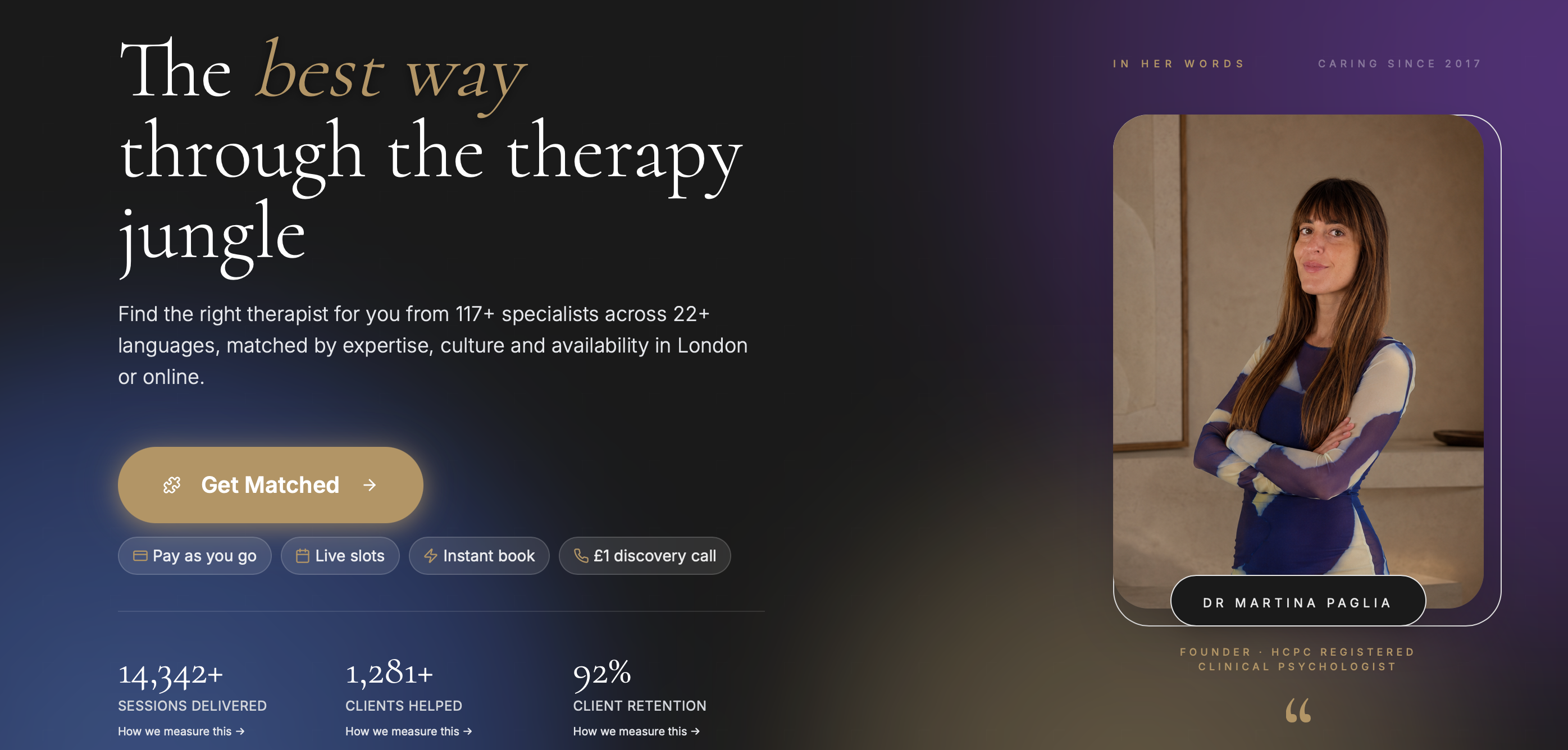
We connect clients to therapists by specialism, language, culture and availability to facilitate finding someone with experience of imposter feelings promptly. Across our network, therapists offer CBT, coaching-style work and trauma-informed modalities including EMDR where that fits your history better than a purely cognitive approach.
- Book a £1 discovery call with most of our therapists before committing to a full course of sessions
- Search our full list of therapists by specialism and language to find the right match quickly
- Browse our range of services, including individual therapy, CBT and online sessions, to see which format suits you
If confidence issues sit alongside financial stress or workplace anxiety, our anxiety counselling and CBT services address those alongside imposter feelings directly. Prefer to work from home or fit sessions around a demanding schedule? Our online therapy option offers the same range of approaches by video call. Start with a discovery call to find a therapist who fits how you want to work.
FAQ
Can you have imposter syndrome in a friendship?
Yes, the same pattern of doubting whether you deserve belonging or acceptance can show up in friendships, not just work or academic settings. It often looks like assuming friends only tolerate you out of habit rather than genuine affection, and the same cognitive and group-based approaches used for workplace imposter feelings can help address it.
Where can I find online mental health support?
You can self-refer to NHS talking therapies for free CBT-based online or in-person support, though local waiting times vary. Private platforms, including our online therapy service, offer faster matching with a specialist and video sessions from home.
What is an activity for students to reflect on impostor syndrome?
A common exercise is a thought record: students write down a moment they doubted their ability, the automatic thought behind it, and the actual evidence for and against it. Group psychoeducation sessions often pair this with peer discussion, since hearing similar experiences from classmates speeds up the shift away from self-blame.
What is the feeling like you don't belong syndrome?
This usually describes the impostor phenomenon itself: a persistent sense of not belonging or not deserving your position despite genuine achievement. It is not a formal diagnosis but a well-documented pattern that responds to CBT, coaching and group-based support, as outlined by a recent narrative review of treatment approaches.
Sources
- “Overcoming the fear that haunts your success” – the effectiveness of interventions for reducing the impostor phenomenon | Frontiers in Psychology
- The effectiveness of online educational interventions on impostor syndrome and burnout among medical trainees: a systematic review
- Find NHS talking therapies for anxiety and depression - NHS
- Group-based and peer-supported interventions provide normalisation and reduce shame (PMC article)
Recommended
Professional Support
Find the Right Therapy
Explore specialist treatment options related to this article.
Keep Reading
Related Articles

CBT vs ACT: UK Evidence on Faster Relief and Values Driven Change
Discover how CBT and ACT compare in effectiveness and methodology to help you decide which therapy approach best aligns with your specific mental health goals.

Avoid denials: Bupa therapy coverage UK, ombudsman cases & checklist
Learn how to navigate Bupa policy limits, avoid claim denials, and manage your mental health coverage effectively with our essential guide.

70–80% improve with CBT for insomnia: NICE backed access to UK care
Discover how CBT-I effectively treats chronic insomnia, the core techniques involved, and how to access NHS or private care to improve your sleep quality long-term.