
Prepare for therapy in the UK: 1 line opener and 3 item checklist
Streamline your UK therapy sessions by mastering simple preparation techniques, from setting goals and organizing notes to managing your post-session reflection.

Clinically reviewed by
Dr Martina Paglia
Founder & CEO of Mind a Porter
HCPC-registered Clinical Psychologist
Special interests include anxiety, depression, trauma, OCD, burnout, workplace stress, relationship difficulties and high-performance mental wellbeing.
Last reviewed: 7 November 2026
All health information on Mind a Porter is clinically reviewed by our clinical lead. These resources are educational and do not replace professional advice.
Prepare a one-sentence opening and a three-item checklist (top concerns, timeline, practical details) and you will make the most of your next session. Preparation mainly removes logistical distractions rather than "perfecting" what you say, so a few minutes of planning buys you more genuine talking time. The checklist below breaks this down step by step, from the week before your appointment to the moment you leave the room.
TL;DR:
- Preparing for therapy involves spreading planning across the week to streamline the session and avoid last-minute stress, with a focus on reflection rather than logistics.
- Bring clear, concise notes on your top concerns, medication details, previous diagnoses, and a simple opening line to maximize session efficiency.
- Setting a specific, measurable goal for each session using the SMART framework helps maintain focus and track progress over time.
- Online therapy requires testing technology beforehand and securing privacy, while in-person sessions need travel planning and pre-session grounding.
- Debriefing immediately after each session by noting key insights and follow-up tasks improves continuity and helps assess ongoing fit with the therapist.
Table of Contents
- How to prepare for therapy in the week before your session
- What to bring to therapy: documents and notes worth having ready
- How to set a therapy goal and choose your opening line
- What happens in your first therapy session?
- Preparing for online versus in-person therapy sessions
- After therapy: how to debrief and plan your next step
- Who's behind this guide, and what Mind a Porter clients see in practice
- Ways to identify and communicate your emotions effectively
- A short reflection on showing up prepared
- Ready to book a therapist who fits, not just one with an opening slot
- What to ask your therapist to check for fit
- Recognising signs of a good fit and red flags
- Using a discovery call to check compatibility
- Sources
How to prepare for therapy in the week before your session
Preparing for therapy sessions works best when you spread the effort across the week beforehand rather than cramming it all in the night before. A short, staged routine means you arrive with a clear head instead of a rushed one.
Start with reflection, not logistics. Before you touch a booking confirmation or check your insurance details, sit down for ten minutes and write out why you actually sought therapy. Psychologists who study preparation note that the most useful reflection focuses on what hasn't worked before in past attempts at support, not just a fresh list of symptoms. If you have tried therapy before and it stalled, naming what went wrong (a mismatch in approach, a therapist who talked too much, sessions that felt too clinical) tells your new therapist more than a diagnosis ever could.
Here is a practical order of operations for the seven days before your appointment:
- Days 7 to 5 before: Write one to three reasons you sought therapy, and pick a single goal for the first session. Keep it short. One sentence is enough.
- Days 5 to 3 before: Build a rough timeline of when symptoms or events started. You do not need exact dates. "Around last spring, after my job changed" is perfectly usable.
- Days 3 to 2 before: Confirm the appointment time, check any paperwork the practice has sent, and verify how you are paying, whether that is out of pocket, through an employee assistance scheme, or via insurance.
- The day before: If your session is online, log into the video platform once to confirm it works. If it is in person, check the address and note how long the journey will take.
- On the day: Choose a private, distraction-free space (online) or plan your arrival window with ten minutes of buffer (in person).
None of this needs to be elaborate. A timeline scrawled on the back of an envelope does the job just as well as a typed document. What matters is that you are not trying to remember dates or dig out insurance numbers while your therapist is asking the first question.
Pro Tip: Keep your three-item checklist (top concerns, rough timeline, practical details) in your phone's notes app. Reopen it thirty seconds before every session, not just the first one. It takes the guesswork out of "what did I want to talk about today?"
Clinical research on patient engagement backs this up. Reviews of therapy retention consistently link practical preparation and a sense of psychological safety to whether people stay in treatment long enough to benefit from it. Skipping the admin isn't neutral. It tends to show up later as missed sessions or a slower start.
What to bring to therapy: documents and notes worth having ready
Knowing what to bring to therapy saves time that would otherwise go on remembering dates, spelling out medication names, or reconstructing your own history under pressure. None of this needs to be formal. A phone note or a folded sheet of paper works fine.
Bring the following where they apply to you:
- Your top three concerns, written as short phrases rather than full paragraphs ("arguments with my partner about money", "panic before work meetings", "low mood since the move").
- A two-sentence opening line you can say in the first few minutes, so you are not searching for words under pressure.
- Medication names and dosages, including anything prescribed for physical health, since some medications interact with mood or anxiety.
- Previous diagnoses or treatment history, even informal ones, such as a GP mentioning depression without a formal referral.
- Insurance or benefits details and your preferred payment method, so the practical side of the appointment does not eat into your time.
- An emergency contact name and number, which many practices ask for as standard intake information.
- A notebook or notes app open, ready for jotting down one or two things during the session itself.
The notebook point deserves a moment more attention. You do not need to transcribe the session. Aim for one line per idea that felt significant, plus anything your therapist suggests you try before the next appointment. Trying to write everything down usually means you stop listening, which defeats the purpose.
If you take regular medication, write dosages exactly as printed on the packet rather than from memory. Therapists working alongside GPs or psychiatrists often need this level of detail, particularly when anxiety or mood symptoms overlap with a physical health condition. The same goes for previous treatment history: even a single line like "six sessions of CBT in 2023, stopped due to moving city" gives useful context without requiring a full case history.
How to set a therapy goal and choose your opening line
A single, specific goal for each session beats a vague sense of "wanting to talk about things." Therapists consistently find that when clients arrive with one clear focus, sessions move faster and cover more ground, because time is not spent working out where to start.
Your opening line does not need to be polished. It needs to be honest and short enough to say without losing your nerve. A few examples across common situations:
- For anxiety: "I want to figure out why my chest tightens before work calls, and whether there's something I can actually do about it."
- For relationship difficulties: "My partner and I keep having the same argument about money, and I'd like to understand my part in it."
- For grief: "It's been eight months since my father died, and I still can't talk about him without falling apart. I want that to feel more manageable."
Once you have an opening line, turn it into something closer to a working goal using the SMART framework: specific, measurable, attainable, relevant, and time-bound. Standardised, measurable goals of this kind also make it easier to track progress against tools like the PHQ-9 or GAD-7 if your therapist uses them, and many insurers ask for goals framed this way as part of treatment documentation.
Applied to the anxiety example above, a SMART version might read: "Identify two specific triggers for my work anxiety within the first three sessions, and try one grounding technique before calls by the end of the month." That is specific (two triggers), measurable (you'll know if you found them), attainable (three sessions is realistic), relevant (it addresses your stated concern), and time-bound (a month gives it a deadline).
If something about the approach feels off, whether the pace, the questions being asked, or the general style, raise it early rather than waiting it out. Fit matters more than most people expect, and a good therapist will welcome the feedback rather than take it personally.
What happens in your first therapy session?
First sessions are rarely about diving straight into problem-solving. They are typically intake-focused, built around history-taking, symptom checks, and agreeing early goals rather than delivering answers on day one. Knowing this in advance stops people mistaking a thorough intake for a therapist who "isn't getting to the point."
Most first appointments run around 50 minutes, sometimes with extra time set aside beforehand for paperwork and confidentiality explanations. Expect your therapist to ask about:
- Current symptoms, including how long they've been present and how severe they feel day to day.
- Support systems, meaning family, friends, or anyone else you can lean on.
- Safety, a standard check covering risk to yourself or others, asked as routine rather than as a red flag against you.
- History, including previous therapy, relevant physical health conditions, and significant life events.
These questions exist because clinical intake structures are built to gather a fuller picture quickly, not because your case looks unusually complicated. Every new client gets some version of the same questions.
There is no single correct way to feel in a first session. Calm, numb, tearful, or talkative responses are all within the normal range, and progress does not depend on an emotional reaction happening in the room itself.
That reassurance matters more than it sounds. Many people leave a first session worried they "didn't cry enough" or "didn't seem upset," as though a lack of visible emotion means therapy isn't working. It doesn't work that way. Some of the most productive early sessions are the calmest ones.
Preparing for online versus in-person therapy sessions
Preparing for online sessions differs from preparing for in-person ones mostly around technology and privacy, though both benefit from a few minutes of forward planning.
For online sessions, run through this before you log in for the first time:
- Test your camera, microphone, and internet connection at least once before the actual appointment, not five minutes beforehand.
- Have a backup plan ready, such as a phone number, in case the video platform fails.
- Choose a room with a door that closes and let anyone else in the house know you are not to be interrupted.
- Use headphones if you share your home with others, to stop sound carrying beyond the room.
For in-person sessions, the priorities shift toward the physical journey and settling in:
- Plan your travel time generously, adding ten extra minutes for unexpected delays.
- Arrive a few minutes early rather than exactly on time, so you're not still catching your breath when the session starts.
- Use the waiting period to do a brief grounding exercise, such as noticing five things you can see and three things you can hear.
Pro Tip: If a video call drops or you feel unsafe at any point during a session, say so immediately. Therapists are trained to handle technical failures and safety concerns without treating either as an inconvenience.
After therapy: how to debrief and plan your next step
What you do in the five minutes after a session often shapes how much you carry forward from it. A short debrief routine, writing down what stuck while it's still fresh, tends to improve continuity between appointments far more than trying to remember everything a week later.
Try this sequence straight after each session:
- Write one sentence on what stood out most, whether that's something you said, something your therapist noticed, or a question you're still sitting with.
- Note one thing to raise next time, even if it's just "follow up on the grounding exercise."
- If your therapist suggested a mood log or a standard measure like the PHQ-9 or GAD-7, fill it in that day rather than waiting.
- Decide whether the session's pace and content felt right, and jot a line about it. Patterns across three or four sessions tell you more than any single appointment.
- If homework was set, put a date in your diary rather than leaving it open-ended.
After three or four sessions, you'll have enough material to judge whether the frequency, approach, or therapist feels right. If something consistently feels off, that's worth raising directly rather than quietly disengaging. Most therapists would rather hear it than watch a client drift away without explanation.
Who's behind this guide, and what Mind a Porter clients see in practice
This guide draws on published clinical guidance around intake structure, goal setting, and preparation, cross-checked against the practical patterns Mind a Porter sees across its own client base. The aim throughout has been to turn scattered advice into a routine someone can actually follow the night before an appointment.
The platform connects clients with therapists across many languages, filtering by specialism, cultural background, and availability instead of offering a single generic match. There is no waiting list model here. Clients are matched and can often be booked in quickly, which matters when someone has just done the reflective work above and wants to use it while it's still fresh. The platform has delivered many sessions to date, with a high client satisfaction rate.
In practice, this means a client who has written their opening line and picked a single goal doesn't lose momentum waiting weeks for an appointment. They can bring that preparation to a matched therapist within days, while the reflection is still sharp rather than half-forgotten.
Ways to identify and communicate your emotions effectively
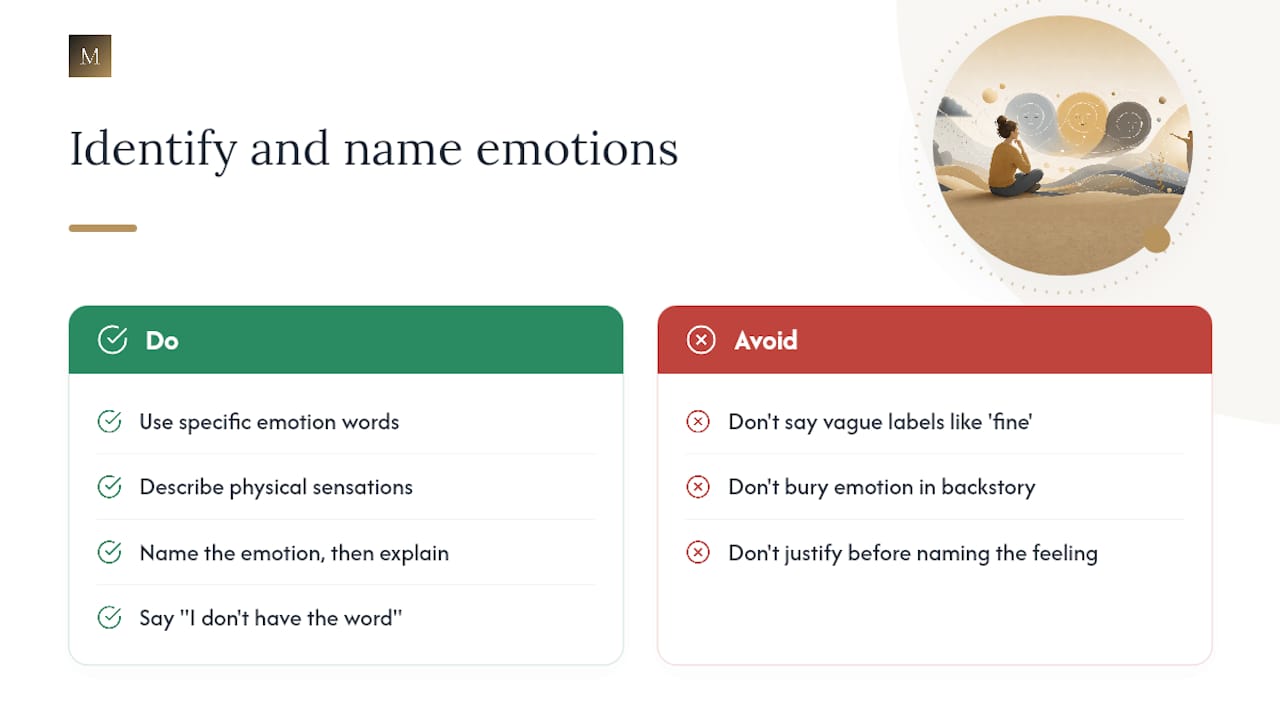
Naming an emotion precisely is harder than it sounds, and vague words like "stressed" or "fine" often hide more specific feelings underneath. Before your session, try replacing broad labels with sharper ones: is it frustration, dread, guilt, or exhaustion? The more specific the word, the easier it is for a therapist to respond to what's actually happening.
A simple technique is to locate the feeling physically first. Tight chest, clenched jaw, restless legs, these physical cues often surface before you can name the emotion behind them, and describing them out loud ("my shoulders have been up around my ears all week") gives your therapist something concrete to work with.
When it's time to say it out loud, resist the urge to explain or justify the feeling before naming it. "I feel resentful, and I'm not sure why" is a stronger opening than a long backstory that buries the emotion at the end. If words fail in the moment, it's fine to say exactly that: "I don't have the right word for this yet." Therapists are used to helping clients find precise language together, and that process is often part of the work itself, not a delay to it.
Complementary resources on preparing what to raise in a session, such as this FAQ on session preparation, can also help you think through what to bring to conversations beyond standard talking therapy.
A short reflection on showing up prepared
A client once told a colleague of mine that she'd spent an entire evening rehearsing what to say, only to blank the second she sat down. What actually helped wasn't a script. It was the one sentence she'd written on her phone that morning: "I want to stop snapping at my kids and not know why." That was enough to start.
Preparation for therapy isn't about arriving polished or having the right words ready for every question. It's about removing the small obstacles, the forgotten insurance number, the untested video call, so you can actually be present when it matters. If you take one thing from this guide, make it this: write your opening line today, even if it's just a single sentence in your phone. You can refine everything else later.
Ready to book a therapist who fits, not just one with an opening slot
Most of the preparation above assumes you already have a session booked, but getting to that point can be the slowest part for many people, waiting weeks for an initial slot with a generic referral. Mind a Porter works differently: it matches you to a therapist based on specialism, language, and cultural background before you ever join a waiting list.

That matching matters once you've done the groundwork in this guide. If you've written your opening line and picked a single SMART goal, you want a therapist suited to that specific concern, not whoever happens to be free next. The roster covers many languages and a range of approaches including CBT and EMDR, so the match reflects what you actually need rather than availability alone. When you book, keep your opening line and goal to hand. Share them in the first message or at the start of the session itself, and that preparation goes to work immediately rather than sitting in a notes app. Visit the Mind a Porter booking page to see available therapists and start the matching process today.
This article is general information, not a substitute for advice from a qualified doctor. Consult a qualified healthcare professional about your own circumstances before acting on anything here.
What to ask your therapist to check for fit
While you focus on sharing your own concerns, remember that the first session is also an opportunity to size up your therapist. Asking direct questions can help you decide if their approach is a good match for you. Consider asking about:
- Training and accreditation: Ask where they trained and with which professional body they are registered (e.g., BACP, BABCP, or UKCP).
- Approach and rationale: Ask what therapeutic model they use and why they believe it might be effective for your specific situation.
- Practical boundaries: Clarify their cancellation policy, how they handle communication between sessions, and what their emergency contact procedures are.
- Data and privacy: If you are unsure, ask how they record notes and manage your confidential data.
- Supervision: You may want to ask how their clinical supervision works, which ensures they are receiving professional support to maintain their practice.
Recognising signs of a good fit and red flags
The quality of your "therapeutic alliance"—the sense that you and your therapist are working together effectively—is one of the strongest indicators of successful treatment. A good fit is often characterised by feeling heard, receiving clear explanations, and establishing a collaborative plan rather than feeling like you are being lectured.
Conversely, be aware of "red flags" that suggest a potential mismatch:
- Feeling pressured to disclose sensitive information faster than you are comfortable with.
- Receiving vague, shifting, or dismissive answers when you ask about confidentiality limits.
- Noticing boundary violations, such as unclear session timing or inappropriate personal disclosures from the therapist.
- Encountering judgemental or shaming language regarding your experiences.
If something feels off, try raising it directly first. Ask for an adjustment in pacing or approach. If the concern persists after a conversation, it is entirely reasonable to look for a different therapist. It is also standard advice to give it two or three sessions before making a final decision on fit, as nerves during an initial meeting can sometimes disguise a positive long-term connection.
Using a discovery call to check compatibility
Before committing to a full intake, you might consider booking a discovery call. Unlike a 50-minute clinical session, this is a shorter conversation—usually 10 to 20 minutes—specifically designed to assess compatibility. Mind a Porter offers these calls for a £1 fee. It is a low-pressure way to discuss what you are looking for, learn about the therapist’s style, and settle the practical admin of scheduling and payment, all before you fully commit to a therapeutic relationship.
To arrange a first session, you can get matched with a therapist in a few minutes.
You can read more about private therapy in London and how sessions are structured.
Frequently asked questions
Should I prepare for my appointment in one go? It works best when you spread your planning across the week rather than cramming everything in right before the session. A short, staged routine helps you arrive with a clear head. By breaking tasks down into smaller steps, you can avoid feeling rushed and arrive at the appointment feeling ready instead of stressed.
What should I write down to take with me? You should bring a list of your top concerns using short phrases and a concise opening line to start the session. Include details of any medication you take, previous treatment history, and your payment method. Having these notes on a piece of paper or in your phone saves time and helps you feel more prepared.
How can I make my goals easier to manage? You can use the SMART framework to create goals that are specific, measurable, attainable, relevant, and time-bound. This approach helps you focus on what you want to achieve during the session. Setting a clear goal for each appointment makes it easier to track your progress and ensures you cover important ground with your therapist.
What is the best way to end each session? Spend five minutes immediately after your session noting down key insights or questions you want to discuss next time. You should also complete any homework set or mood logs while the information is fresh in your mind. This simple debriefing routine helps maintain continuity and makes it easier to assess whether the sessions are working well.
Sources
Next Step
Reading is a start. Talking is the next step.
Tell us what you are looking for and we will match you with a qualified therapist who fits. Online across the UK, or in person in London.
Professional Support
Find the Right Therapy
Explore specialist treatment options related to this article.
Keep Reading
Related Articles

Therapy and Medication Together: Why the Combination Often Works Better
Many people recovering from depression or anxiety find that therapy and medication work better as a pair than either does alone. Here's what the evidence says, and how to make the combination work for you.

How long does therapy take to work? A realistic timeline
The first change usually arrives in weeks three to six, but a full course runs longer. What the timeline really looks like, week by week.

Grief Counselling Options in the UK: How to Choose
Navigate the UK's bereavement support landscape by comparing costs, accessibility, and types of care to find the right therapeutic path for your specific needs.